3D Scan Interpretation Examples
These worked examples apply the color and shape principles, together with the factors that affect results, to real 3D Ground Scan data. Each one pairs a buried object with its actual scan output so you can learn to recognize the pattern in your own scans.
These examples are a guide, not a guarantee. Always cross-check the color, signal shape, scan size, and real-world context before deciding what to dig for.
Quick Reference
| Object | Color | Signal shape | Likely material |
|---|---|---|---|
| Treasure chest | Red, square shape | Sine wave (blue → red) | Ferromagnetic |
| Tunnel / cave | Blue, large area | Negative dump | Non-metallic (void) |
| Vase with coins | Red, rounded | Mostly positive, small peak | Non-ferromagnetic |
| WW2 bomb | Red and light blue | Sine wave | Ferromagnetic |
| Gold deposit | Red, small area | Two peaks | Non-ferromagnetic |
| Plastic pipeline | Blue, long straight line | Small negative dip | Non-metallic |
| Meteorite | Strong red, rounded | Rounded positive, no peaks | Dense ferromagnetic compound |
| Gem stones / minerals | Blue, small pockets | Negative, varying strength | Non-metallic |
| Shipwreck / massive metal | Red and light blue, large area | Positive peaks + sustained negative | Ferromagnetic |
| WW2 rifle | Red, elongated shape | Two peaks | Non-ferromagnetic / mixed |
Treasure Chest
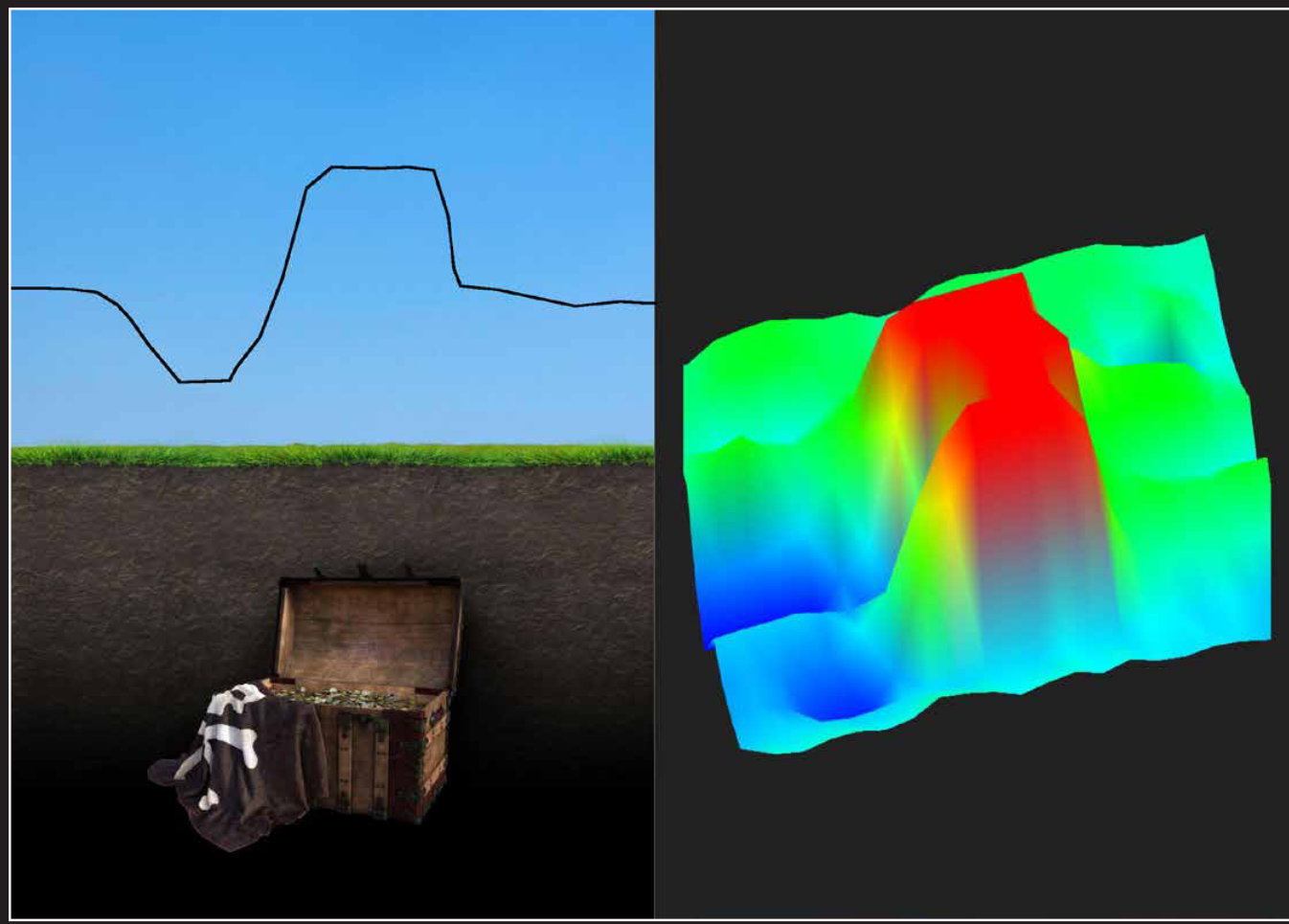
A square red signal with some blue around it. The 2D signal line shows a sine wave from blue to red, indicating a ferromagnetic object (the chest's metal fittings and hinges). The square shape and large scan size are consistent with a chest-sized object.
Tunnel or Cave
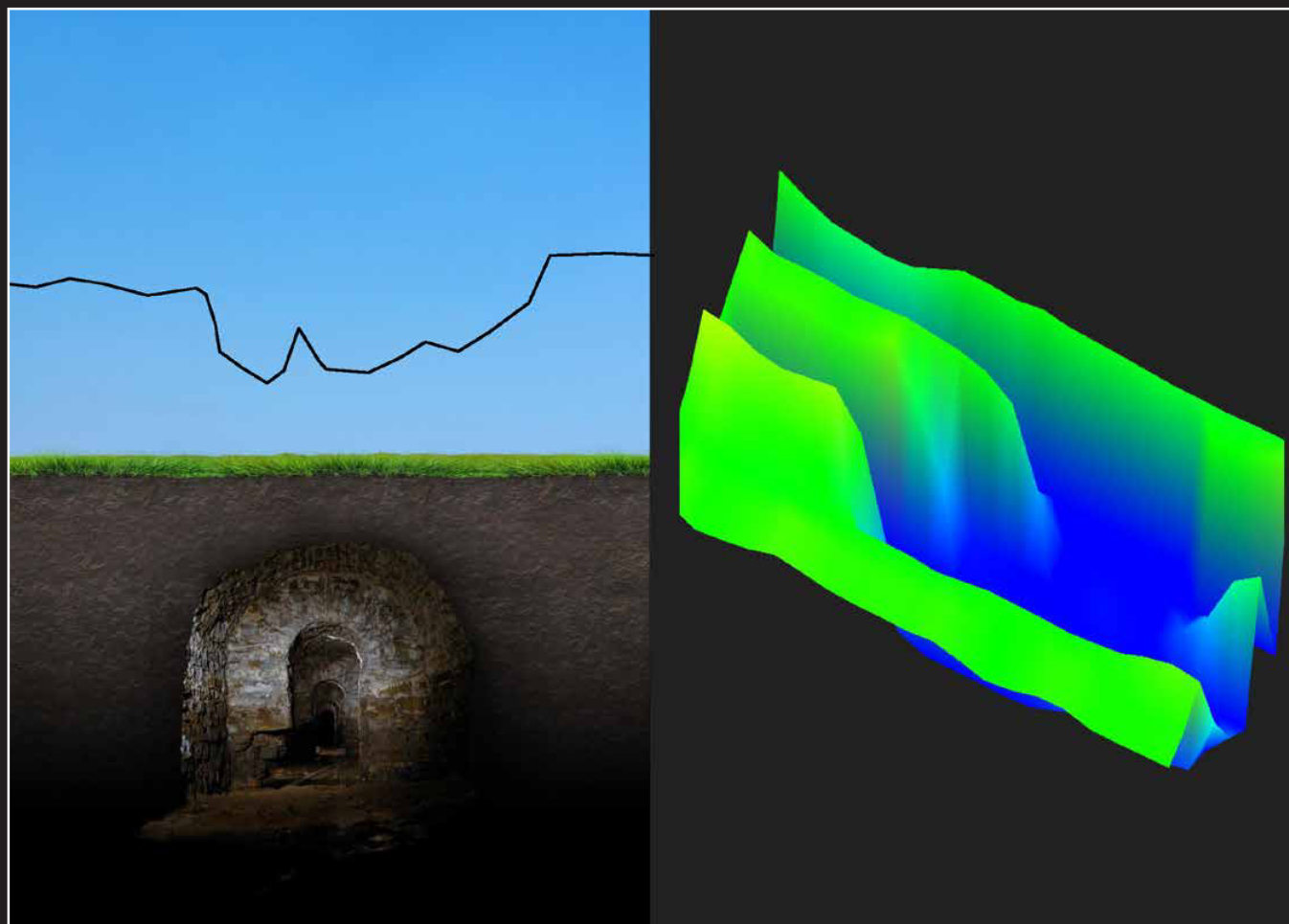
A large area of blue with a big negative dump on the 2D signal line — no metallic object detected, just a large non-metallic void. The size of the scanned area suggests a cave or tunnel rather than a small pocket of air.
Vase with Coins
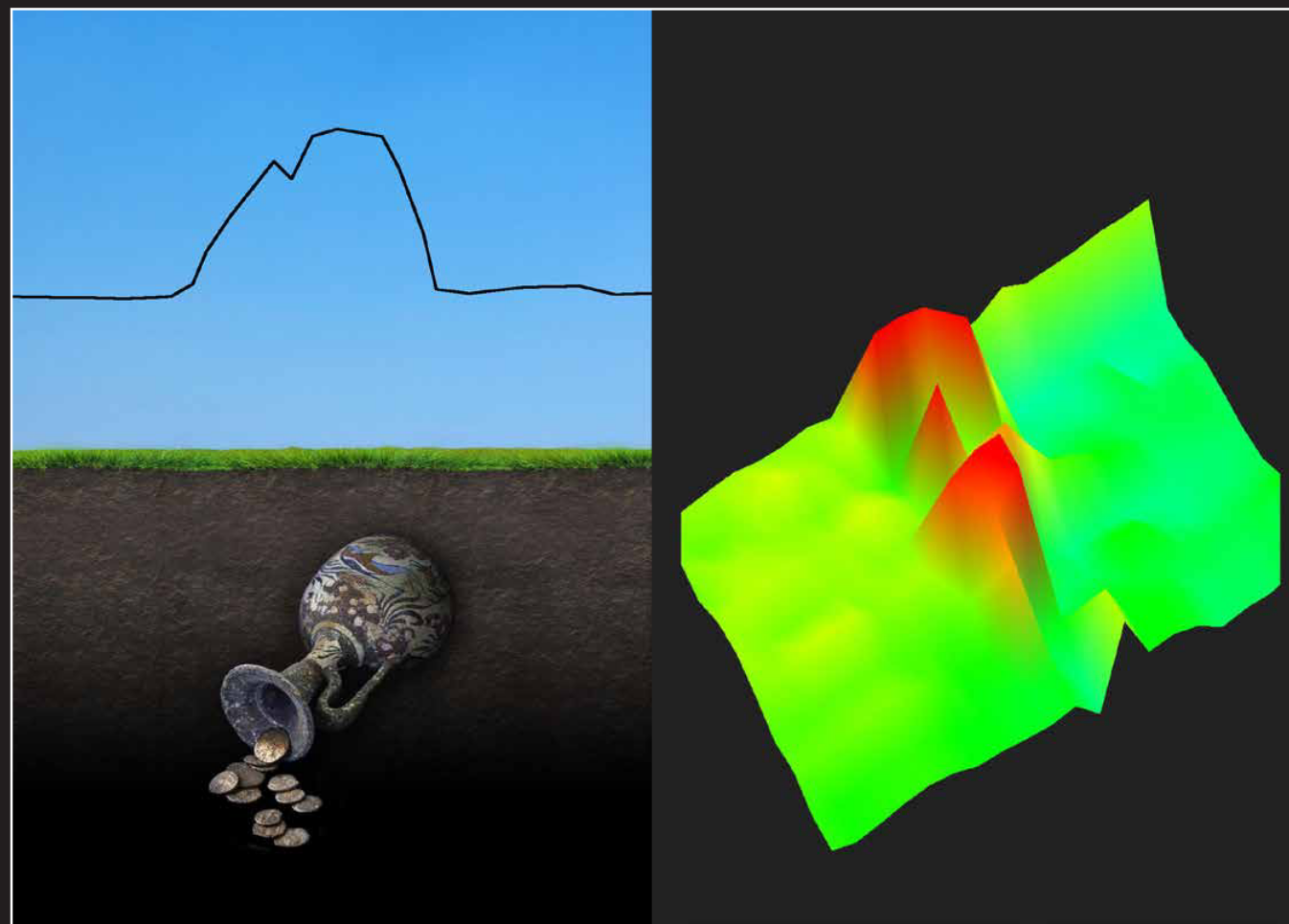
A red, rounded scan shape. The 2D line is mostly positive with a small peak in the middle — a non-ferromagnetic signature. The rounded shape and smaller overall size suggest a small rounded object such as a vase, possibly with coins nearby.
WW2 Bomb
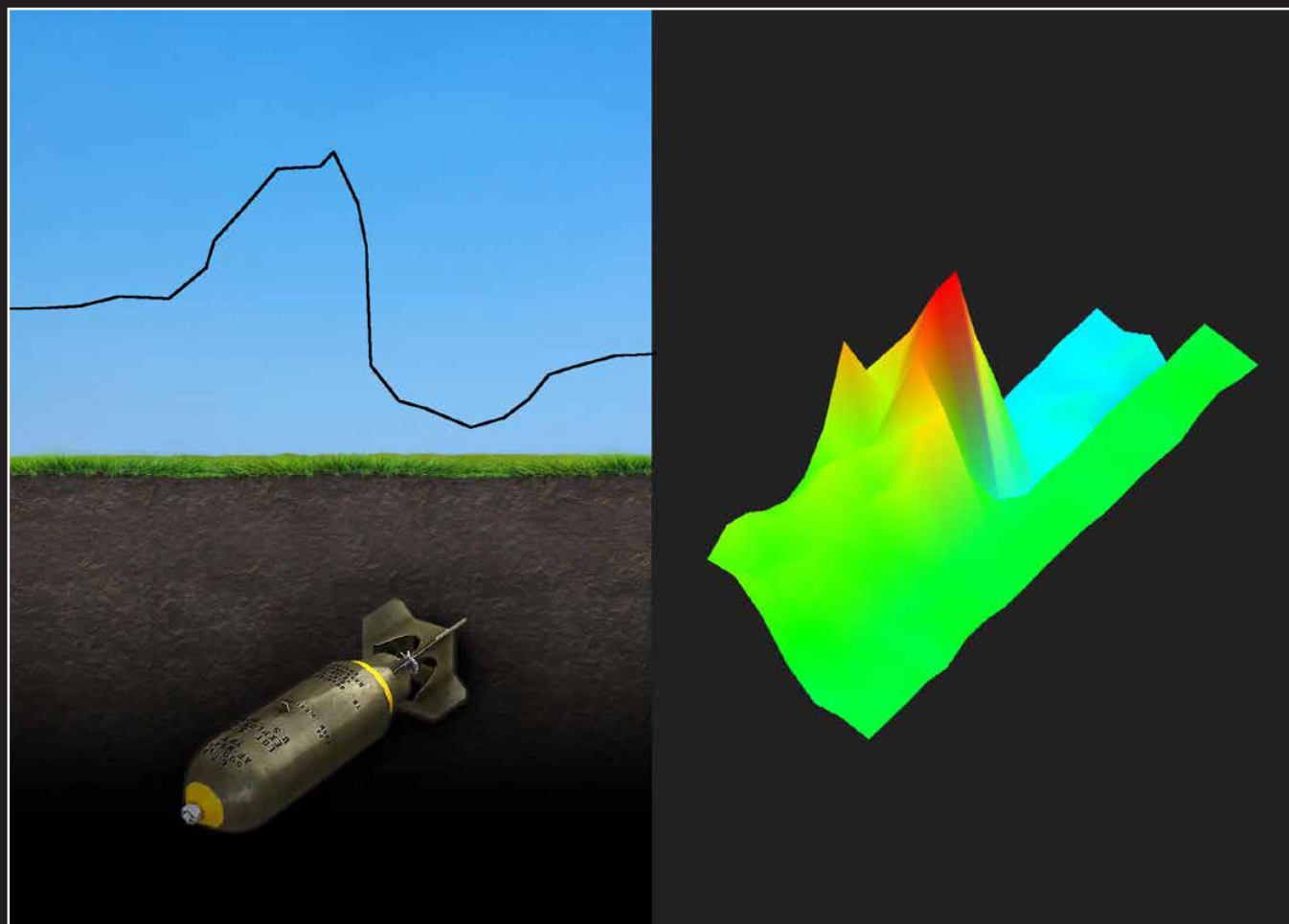
Red and light blue colors with a sine-wave 2D signal — a ferromagnetic (iron) signature. The elongated, rounded scan shape and medium size are consistent with unexploded ordnance.
If a scan resembles ordnance, do not dig. Stop, mark the location, and contact local authorities or a bomb disposal unit.
Gold Deposit
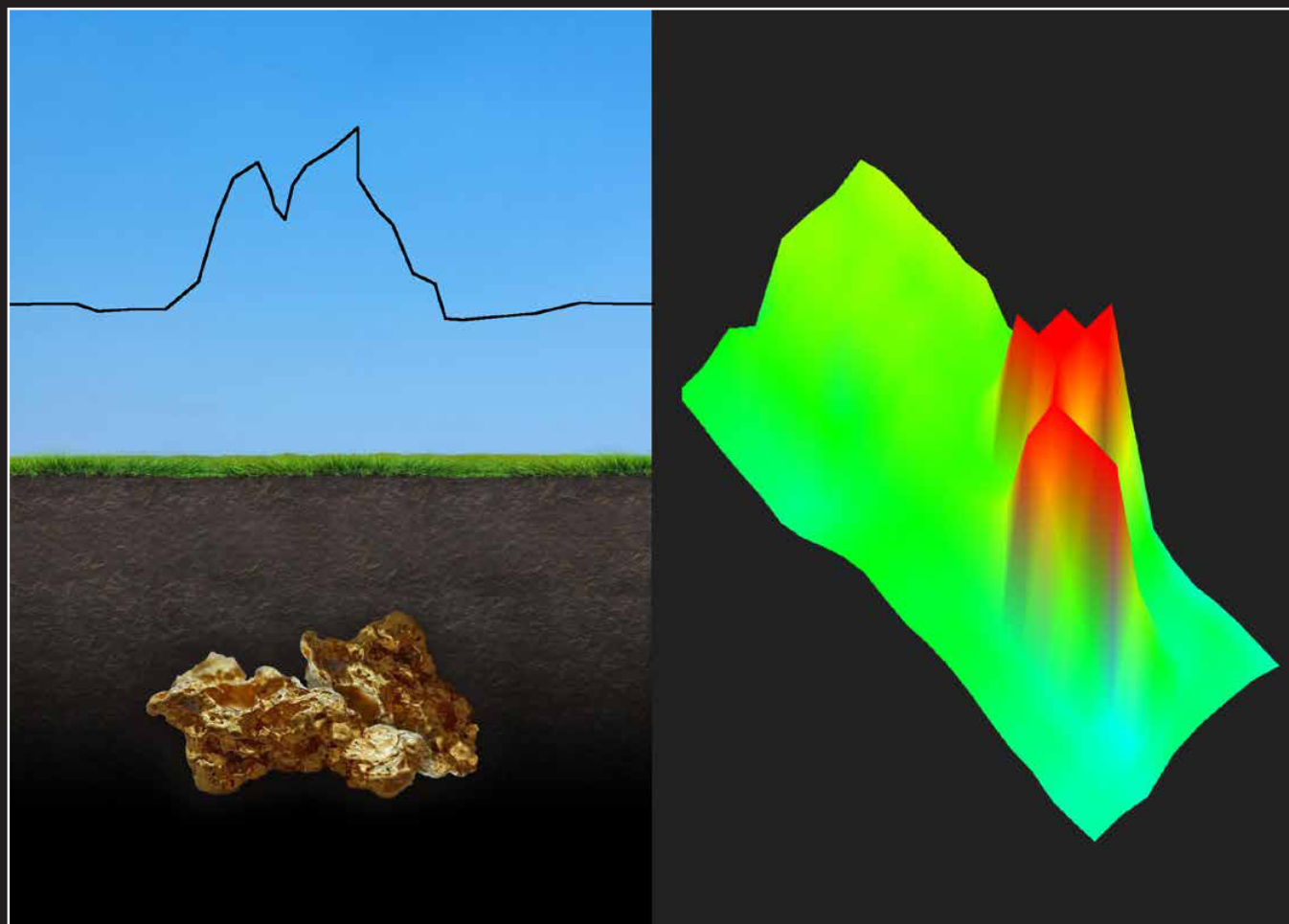
Red, with a two-peak 2D signal — a non-ferromagnetic signature typical of natural gold. The scanned area is smaller than a buried object of similar signal strength, which is consistent with a gold nugget or deposit rather than a manufactured object. Gold veins can produce a much larger version of this same pattern.
Plastic Pipeline
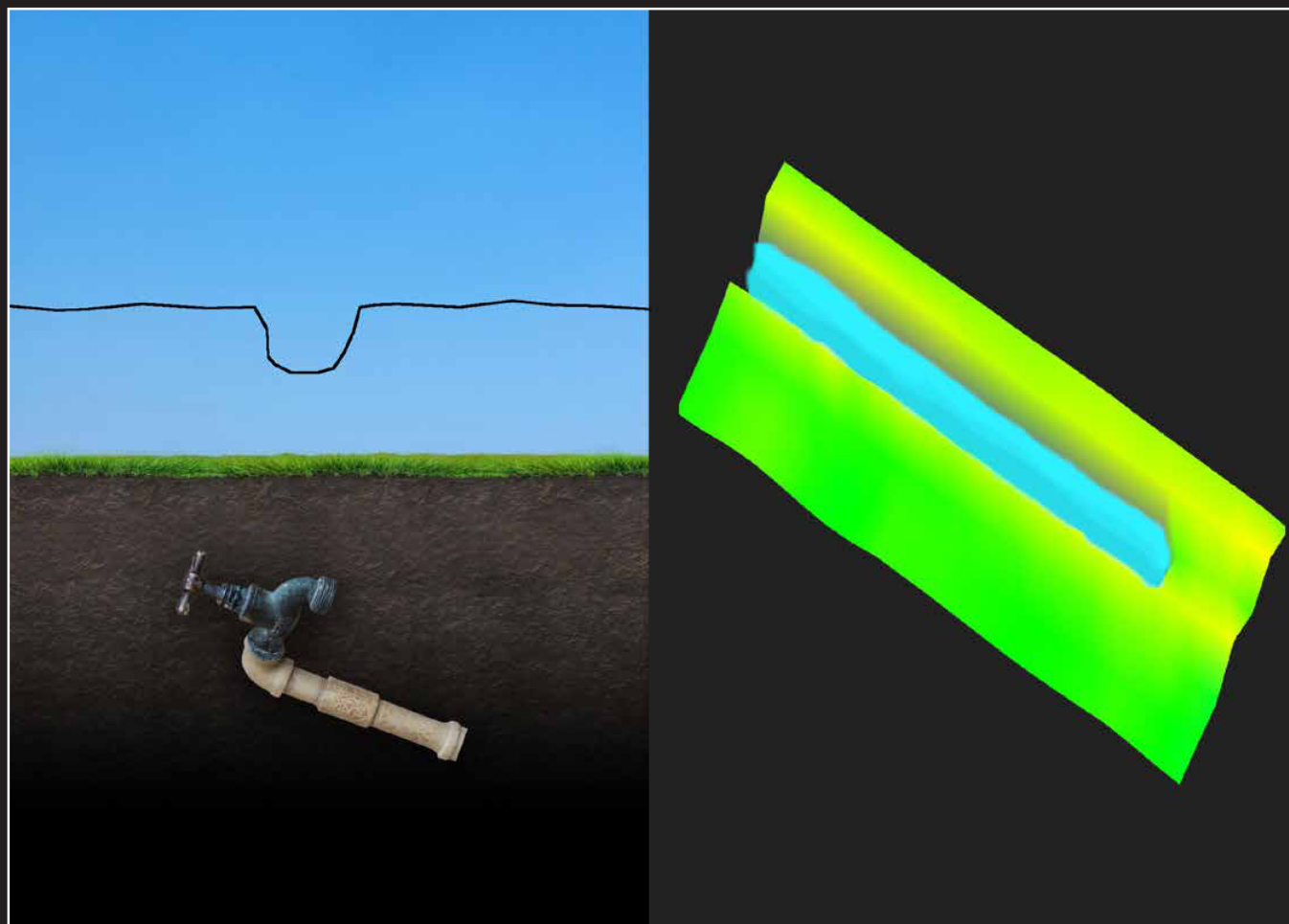
A straight, shallow blue line with only a small dip on the 2D signal — a non-metallic signature consistent with a plastic pipe or waste line. Scanning a wider area along the line lets you trace its full length.
Meteorite
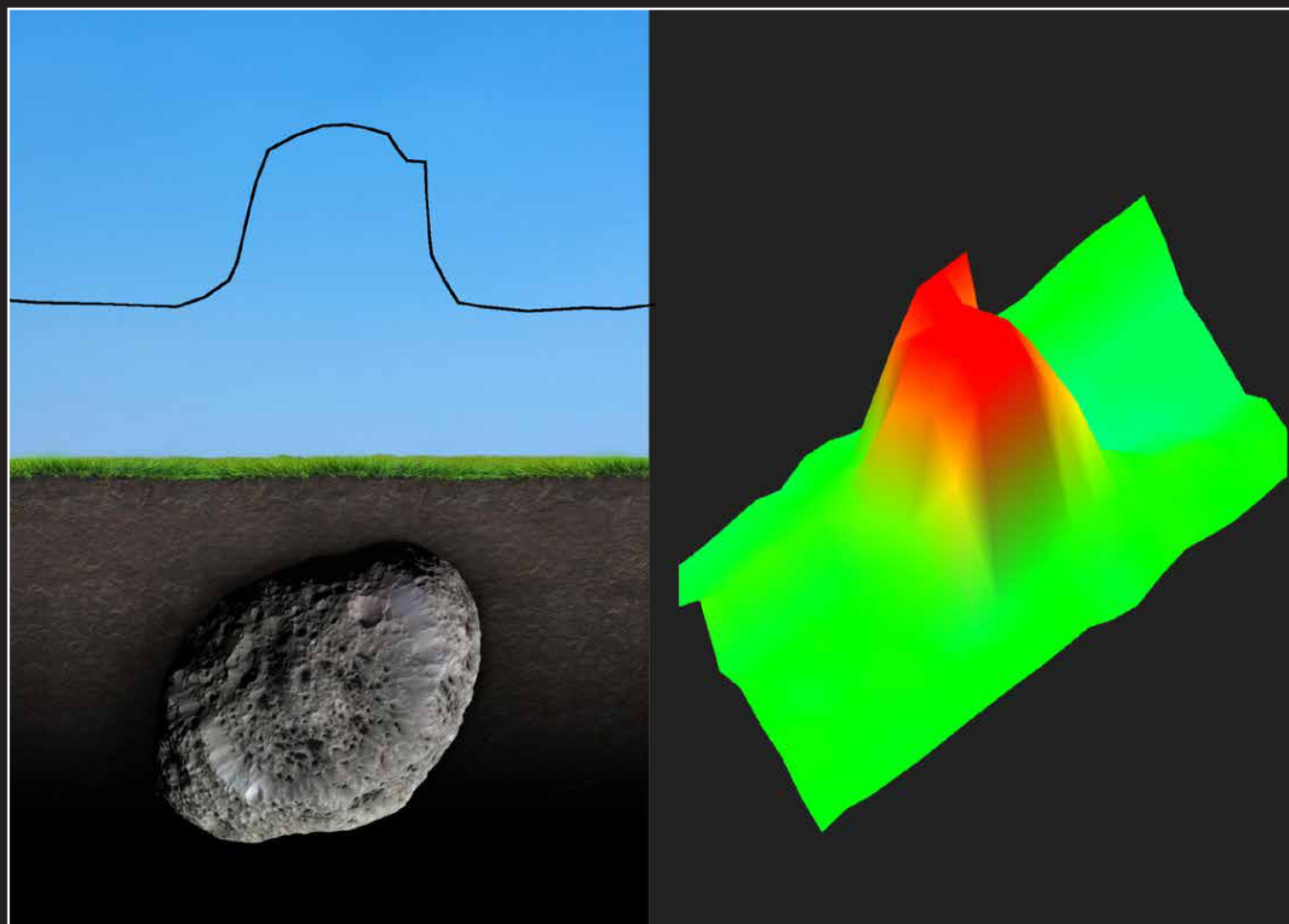
A strong, rounded red signal with no peaks on the 2D line — dense ferromagnetic material in a rock-sized, rounded scan. This pattern is a useful way to discriminate a metallic meteorite from ordinary rock when scanning a rocky area.
Gem Stones / Mineral Deposit
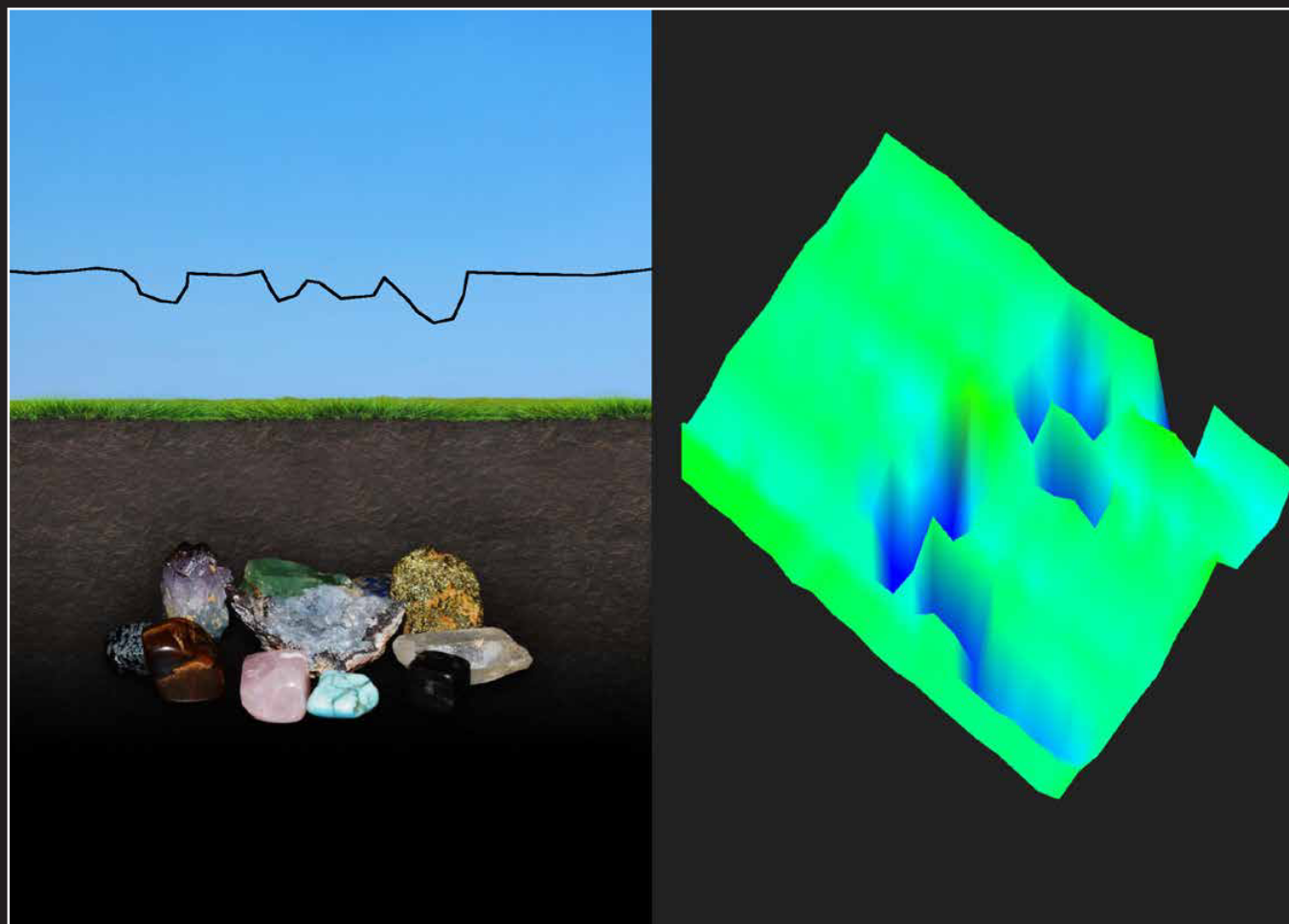
Small blue pockets with varying negative strength on the 2D line — a non-metallic signature. The small scan size and scattered pockets are typical of ground worth investigating for gemstones or mineral deposits, rather than a single buried object.
Massive Metallic Object (e.g. Shipwreck)
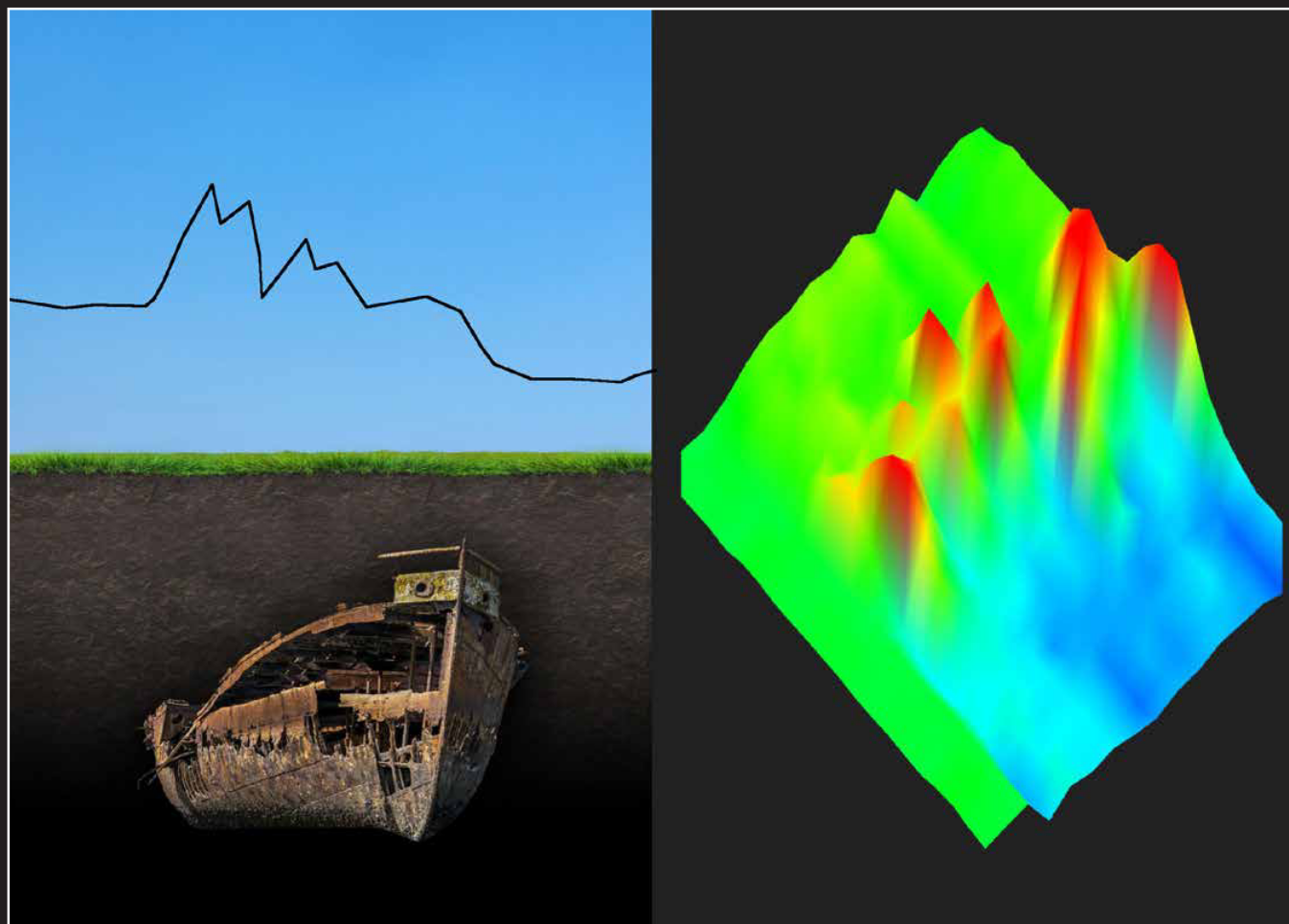
Multiple red peaks with light blue across a large, unfinished scan area — the object is too big to fully capture in one pass. The 2D line shows repeated positive peaks followed by a sustained negative signal, indicating a large quantity of ferromagnetic material. Wrecks like this can also conceal other materials, including gold — scan the surrounding area at a larger scale to get the full picture.
WW2 Rifle
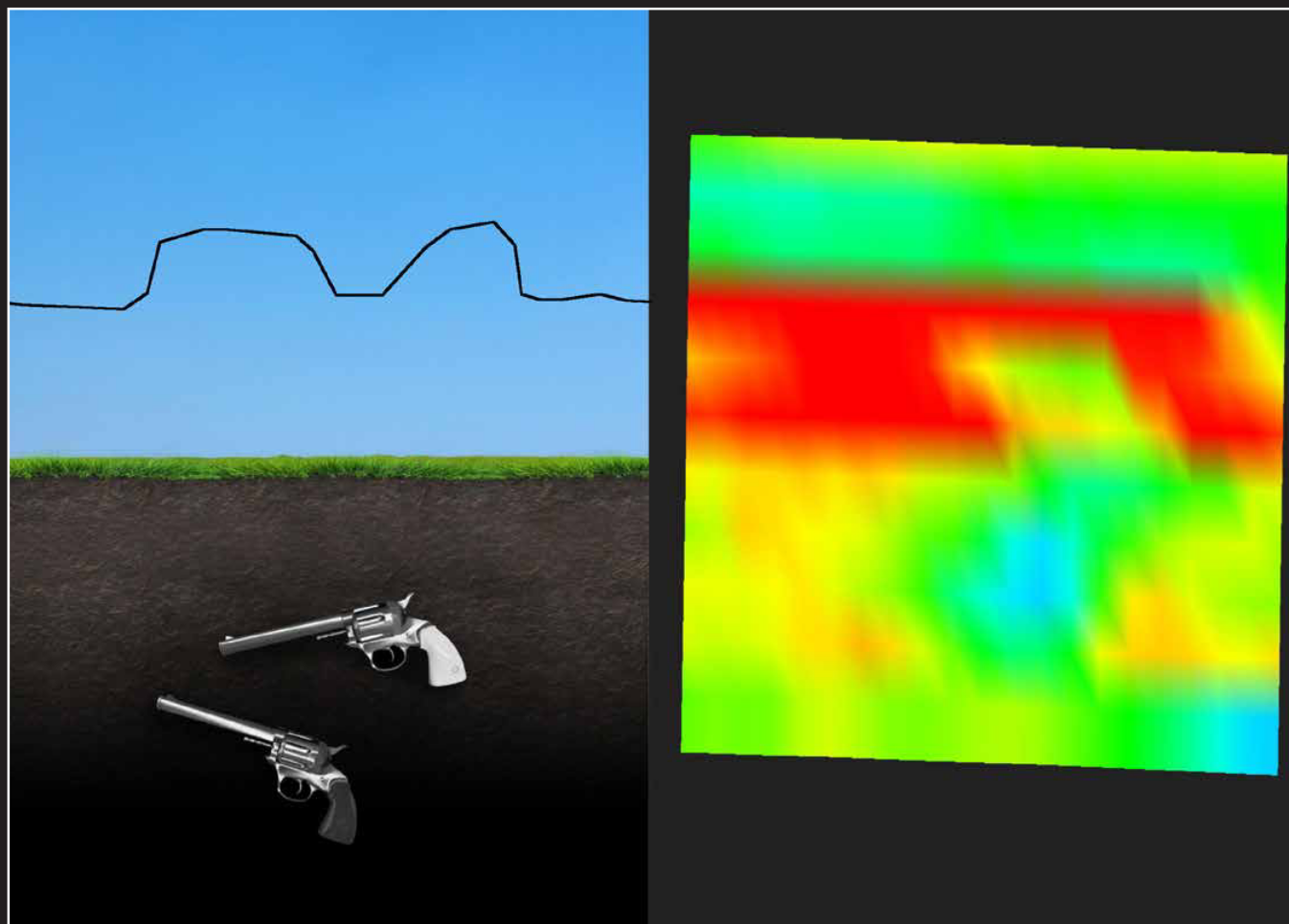
A red, elongated scan shape with a two-peak 2D signal, matching a rifle-sized object lying on the ground. TreasureHunter3D detectors with the depth indicator feature can estimate the object's depth from this scan, using the signal data together with your configured soil type — treat the result as an approximation, since soil composition varies site to site.
AR Camera Mode Examples
On GoldenEye Plus, Professional 3D scan mode overlays the same color and shape data directly onto the live camera view.
Steel (Iron) Rod
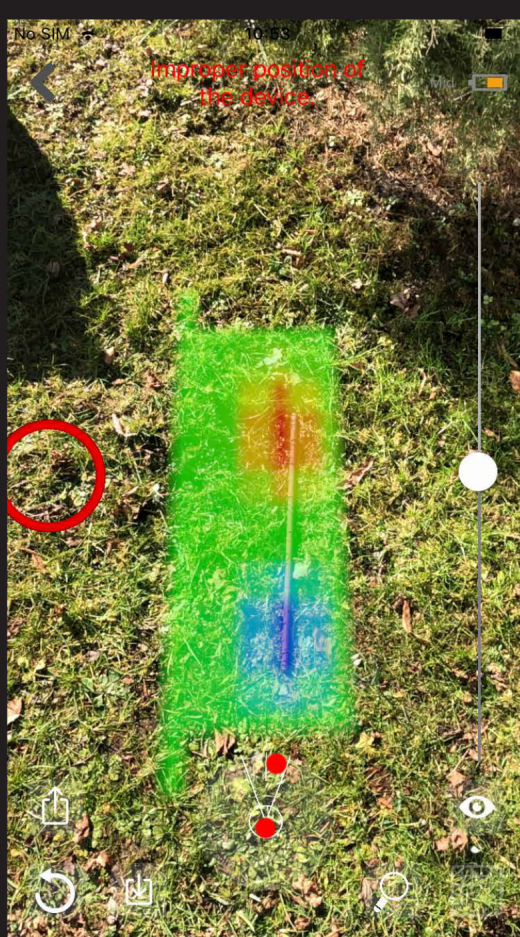
The signal goes from red to blue (a sine wave), typical for iron. The scan also displays a narrow, linear shape — consistent with a rod-shaped object lying in the ground below.
Buried Grenade
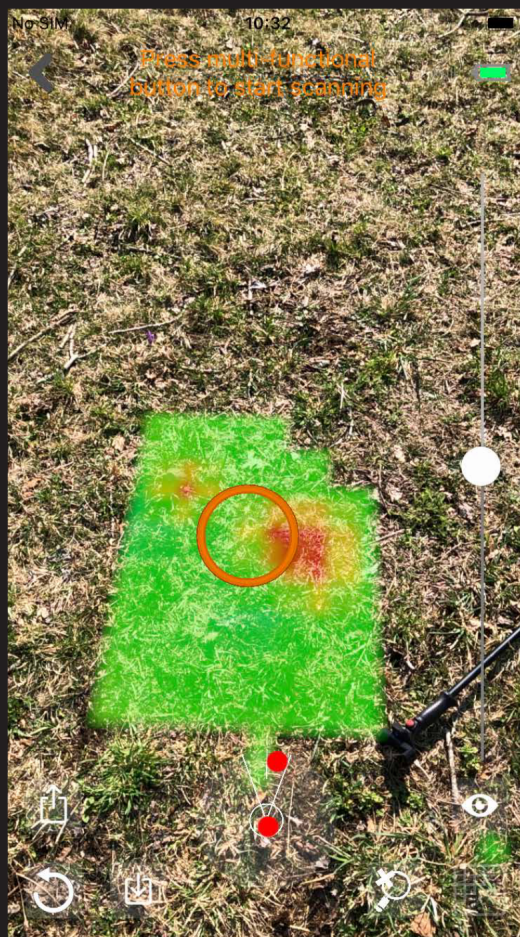
A red, circular signal — a ferromagnetic material consistent with the iron compound grenades are made from. The circular shape is a strong clue to the object's likely form.
As with any ordnance-like signal, do not dig. Mark the location and contact local authorities.
Next Steps
- Reading Colors and Shapes — the color and signal-shape fundamentals
- Factors That Affect Scan Results — depth, size, position, and rotation