Factors That Affect Scan Results
The color and shape rules on the previous page hold true in ideal conditions, but a real object's depth, size, position, and orientation in the ground all change how strong or how distorted its signal looks. Understanding these factors helps you avoid misreading a scan.
Depth
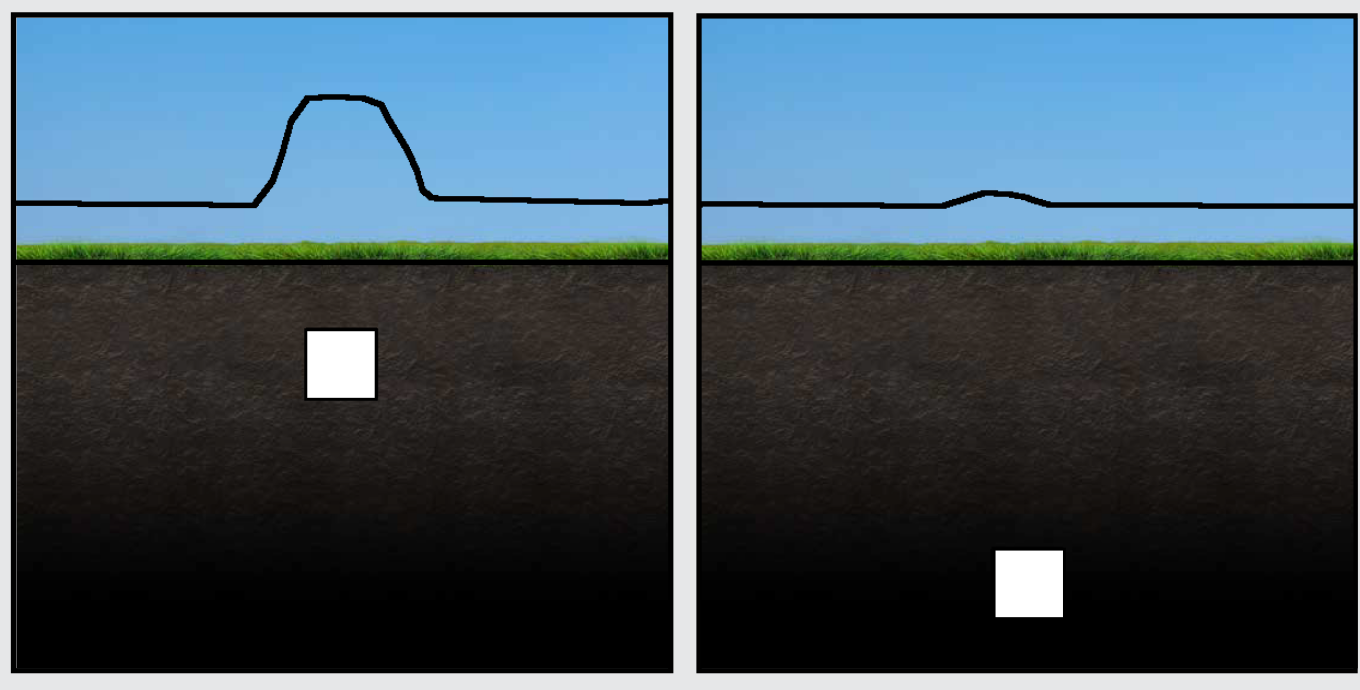
A shallow object produces a strong signal. The same object buried deeper produces a weaker signal — or none at all.
Size and Mass
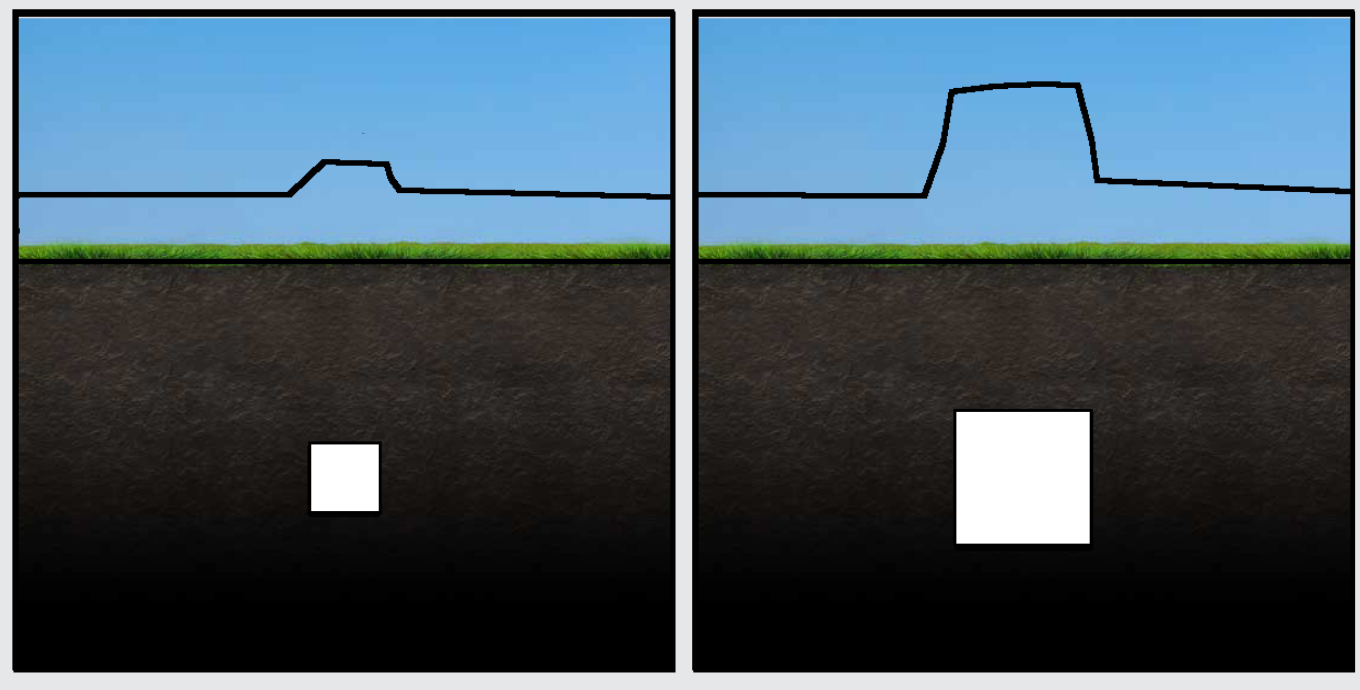
A small object is harder to detect and produces a weak signal. A larger object of the same material produces a much stronger signal.
Position — Stacked and Overlapping Objects
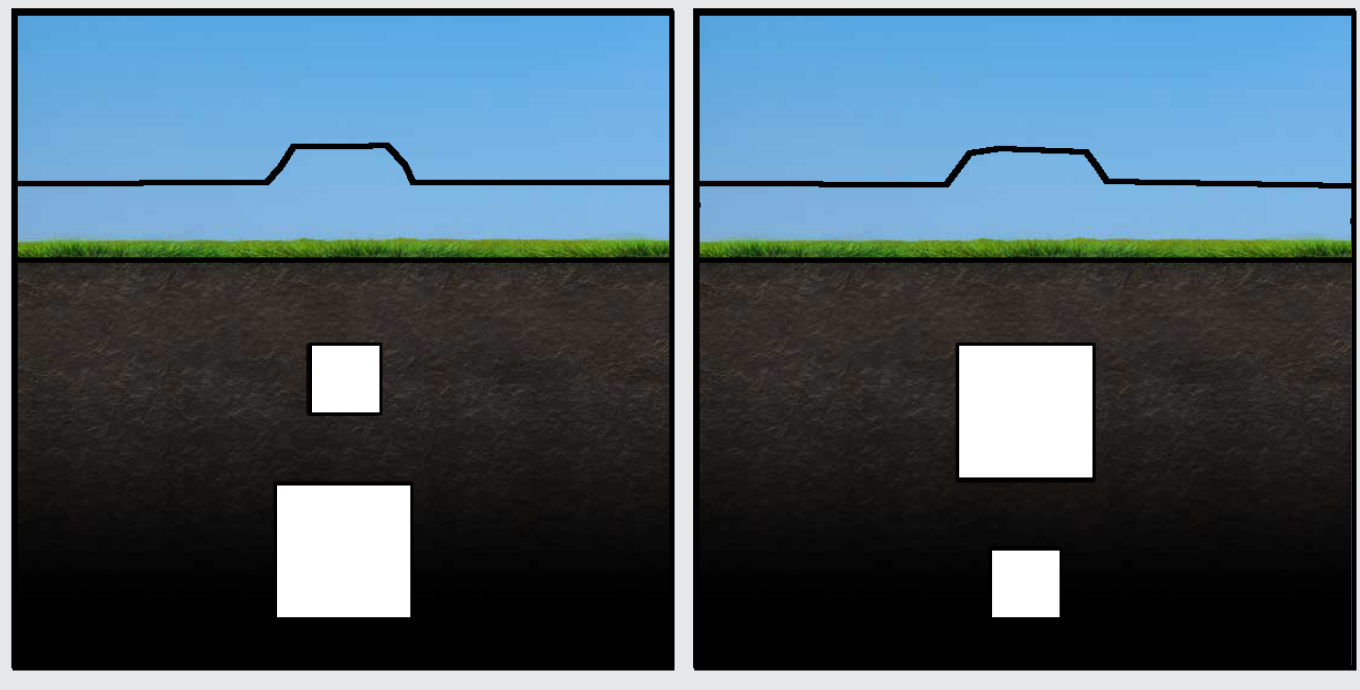
When two objects are buried on top of each other, the detector displays the sum of both signals. If a small object sits on top of a bigger one, the detector still finds both but displays them as a single, larger target.
Rotation
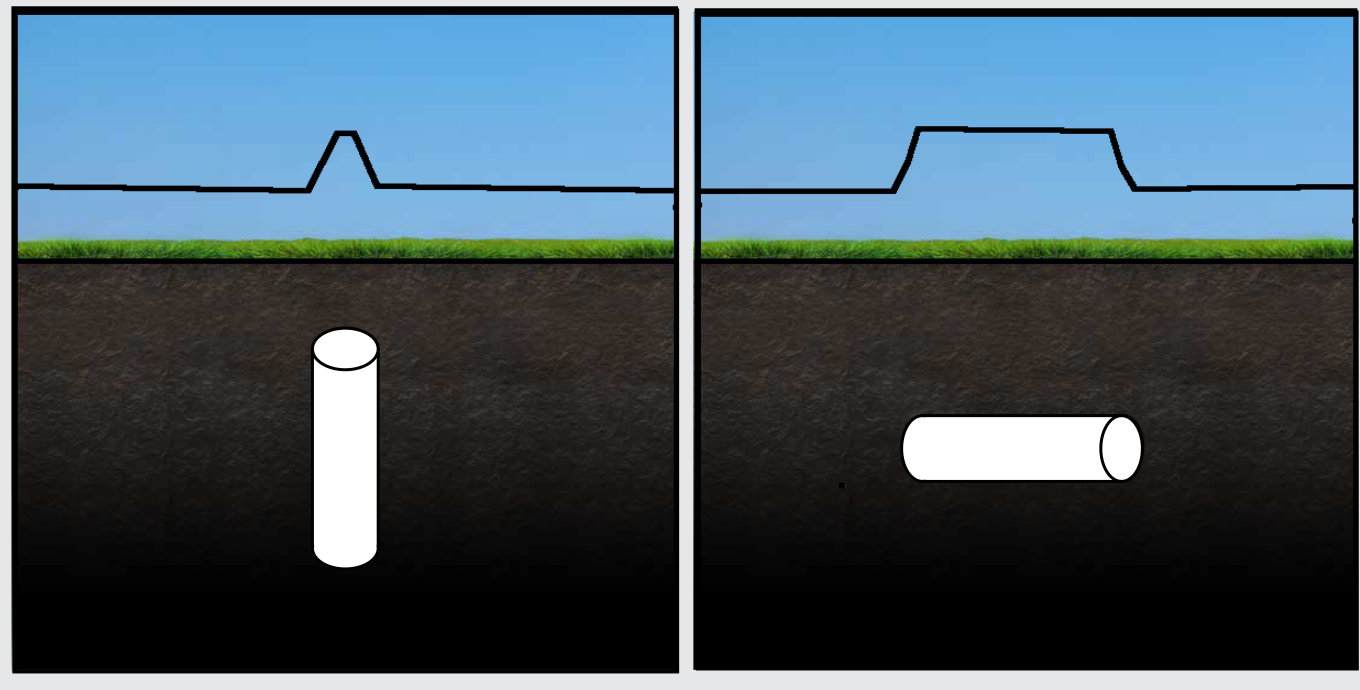
Objects can be buried in any orientation. The detector only reads what it can see from the surface, so the signal shape can look very different from the object's true shape depending on how it's rotated — a rod standing upright reads differently than the same rod lying flat.
Shape and Size Ambiguity
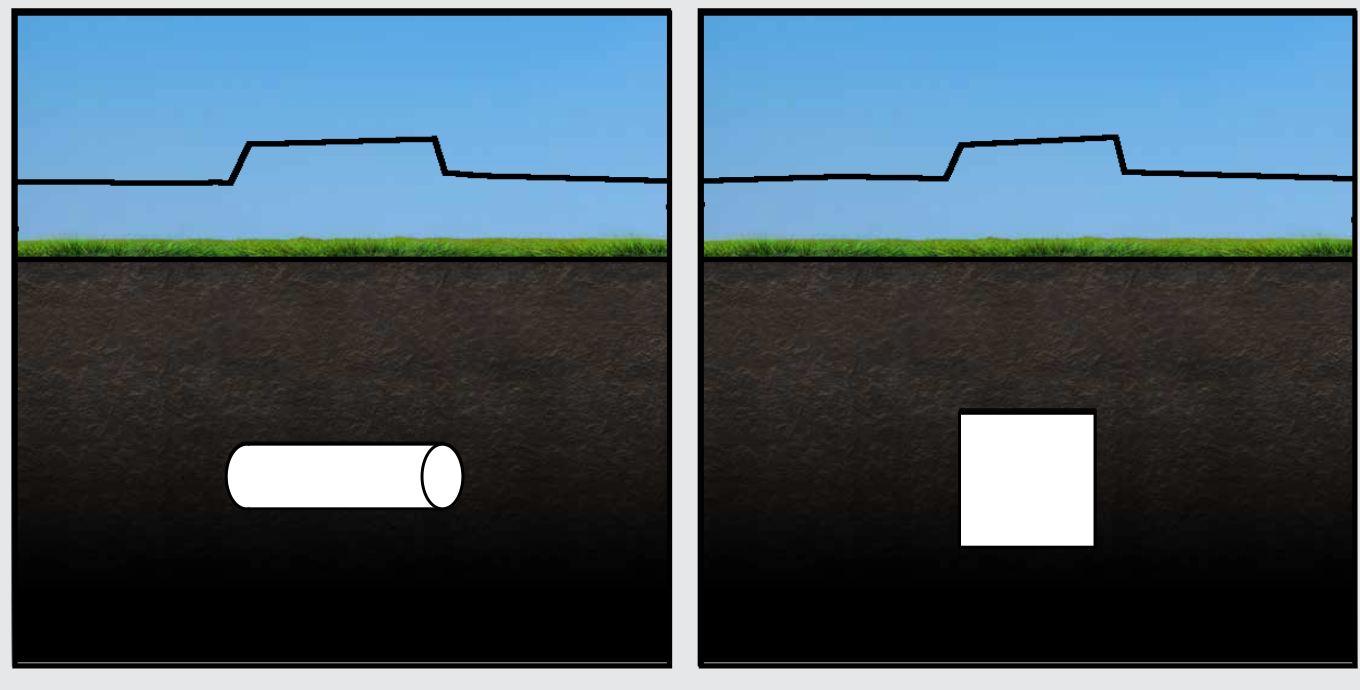
Different objects — different shapes and different sizes — can produce the same or similar scan signature. A signal shape is a strong clue, not a certainty; always confirm by digging.
Other Causes of False Readings
Beyond depth, size, position, and rotation, several environmental factors can distort or invalidate a reading:
| Cause | What to do |
|---|---|
| Swinging or rotating the detector during a scan | Keep the detector steady and level; scan the same area from the same direction |
| Scanning the same spot from different directions | Compare results from multiple passes — direction affects the reading |
| Soil mineralization / soil type | Perform multiple scans of the same area to confirm results |
| Earth's magnetic field curvature | Expect a possible position offset in AR 3D scans — this is normal, not an error |
| External electromagnetic interference (power lines, signal generators) | Move away from the interference source and re-balance |
| Signal drifting after balancing, with the detector stationary | This indicates nearby electromagnetic interference — relocate and re-balance |
If a result looks wrong, don't trust a single pass. Re-balance the detector away from any metal, then scan the same area again — ideally from a different direction — before deciding what's buried.
Next Steps
- Reading Colors and Shapes — the color and signal-shape fundamentals
- 3D Scan Interpretation Examples — worked examples for common object types